NO WAITLIST

Giftedness & IQ Assessments in Sherwood Park

A giftedness assessment is a structured evaluation of how your child thinks, reasons and learns. It's led by a registered psychologist using an individually administered intelligence test such as the WISC-V. You get a clear picture of your child's cognitive strengths, an IQ score that gifted programs recognise, and practical recommendations for school and home.


Nadja Hansen

Nadja Hansen

Registered Psychologist, Clinical Director; EMDR, NIHB and Bigstone approved
Virtual & In-Person
$235 per hour
Nadja is trained in child and adult trauma specific therapies. She is uniquely specialized in supporting adults to process childhood experiences that continue to impact adults individually, in relationships, and in parenting. You deserve to heal from past experiences and Nadja is dedicated to walk alongside you. Nadja also completes Psychoeducational Assessments for children as well as psychological evaluation for Veterans and RCMP for psychological injury.
Accepting New Clients
Morgan McCloy

Morgan McCloy

Registered Provisional Psychologist
Virtual & In-Person
$235 per hour
Anusha specializes in supporting children, teens, and parents with ADHD, anxiety, emotional regulation, behavioural challenges, attachment and relational trauma, self-esteem, and relationship concerns. She is particularly passionate about helping families navigate the challenges of raising highly sensitive, strong-willed, and spirited children while fostering secure, connected parent-child relationships.
Coming Soon...
Lesley Xu

Lesley Xu

Registered Psychologist, Assessment Specialist Ages 6-17
Virtual & In-Person
$235 per hour
Lesley has a special interest in psychoeducational (giftedness and learning) and Attention-Deficit/Hyperactivity Disorder (ADHD) assessments for individuals of all ages. Her priority is to deliver top-quality, personalized assessment services tailored to each individual.
Accepting New Clients

What is Giftedness?

Giftedness means a child's reasoning and problem-solving abilities are well above what's typical for their age. School boards usually identify it with an IQ test given one-on-one by a psychologist, and many look for a score around the 98th percentile or higher. Gifted kids aren't simply high achievers. Many learn differently, feel things intensely and need a different kind of challenge to stay engaged.
Intellectually gifted

Gifted children who also have ADHD, a learning disability, anxiety or autism. Their strengths can hide their challenges which can hide their strengths, so they're often missed. A full assessment captures both sides of the picture.

Intellectually gifted

The profile most gifted programs look for. These children reason quickly, see patterns and connections early, and grasp new ideas with little repetition. Their overall IQ or General Ability Index is usually well above average.

Academically gifted

Some children are exceptional in one area, such as reading, math or verbal reasoning, while their other skills sit closer to average. Because an overall IQ score can hide that peak, these children are easily overlooked for enrichment.
Giftedness is a greater awareness, a greater sensitivity, a greater ability to understand and transform perceptions into intellectual and emotional experiences" 
Annemarie Roeper, 1982

What is a giftedness assessment?

A giftedness assessment is a psychologist-led evaluation of your child's thinking skills: verbal reasoning, visual-spatial reasoning, working memory and processing speed. It combines a standardised intelligence test with a parent interview, developmental history and, where helpful, teacher input. Many families add academic testing so the report also shows how learning is going in reading, writing and math.

Signs of Giftedness in Young Children

Kids and teens with ADHD often struggle to stay focused, seem not to listen, make careless mistakes and lose things. Some fidget, talk a lot, interrupt or can't stay in their seat. Teachers may describe them as bright but not reaching their potential, and they can get frustrated quickly or start falling behind their friends.

Signs of Giftedness in Pre-Teens & Teens

Learning new material quickly and getting bored with repetition, asking complex questions, preferring older friends or adults, a strong sense of fairness, perfectionism, and intense reactions. Teachers may describe them as “bright but unmotivated” when the work isn't challenging enough.

Giftedness in Girls & Twice-Exceptional Kids

Gifted girls are more likely to fit in quietly, mask their abilities to belong with peers, or hold back to avoid mistakes. Twice-exceptional children may look average because a learning or attention difficulty offsets their strengths. Both groups are often missed by classroom screening alone.

Gifted programs, testing age and adults

What age can a child be tested for giftedness?

Our assessments are for children and teens aged 6 to 17. The WISC-V, the most widely used intelligence test for school-age children, covers ages 6 to 16, and results tend to be more stable from age 6 onward. If your child is younger and you're thinking about a program, book a free consultation and we'll talk through timing.

Giftedness Assessments for Gifted Program Applications

Many Edmonton-area gifted programs ask for a psychological assessment as part of the application. For example, Edmonton Public Schools identifies Gifted & Talented learners through a group ability test (CCAT-7) and/or a psychoeducational assessment by a psychologist. Its Extensions program requires a completed psychological assessment. Entry criteria differ between school divisions, so check your school's cut-off and deadline first. Applications often open in winter, so we recommend booking in the fall.

What happens during a giftedness assessment?

A giftedness assessment follows three clear steps, from your free consultation to a written report you can take to your child's school. Testing feels more like puzzles and brain games than an exam, and most children enjoy it. We look at your whole child, not just a number, and explain every result in plain language.

Before your first visit

After a free 15-minute consultation, you'll complete online intake forms covering your child's development, school history and what you're hoping to learn. Please share recent report cards, any past assessments and the gifted program's application requirements.

Your assessment

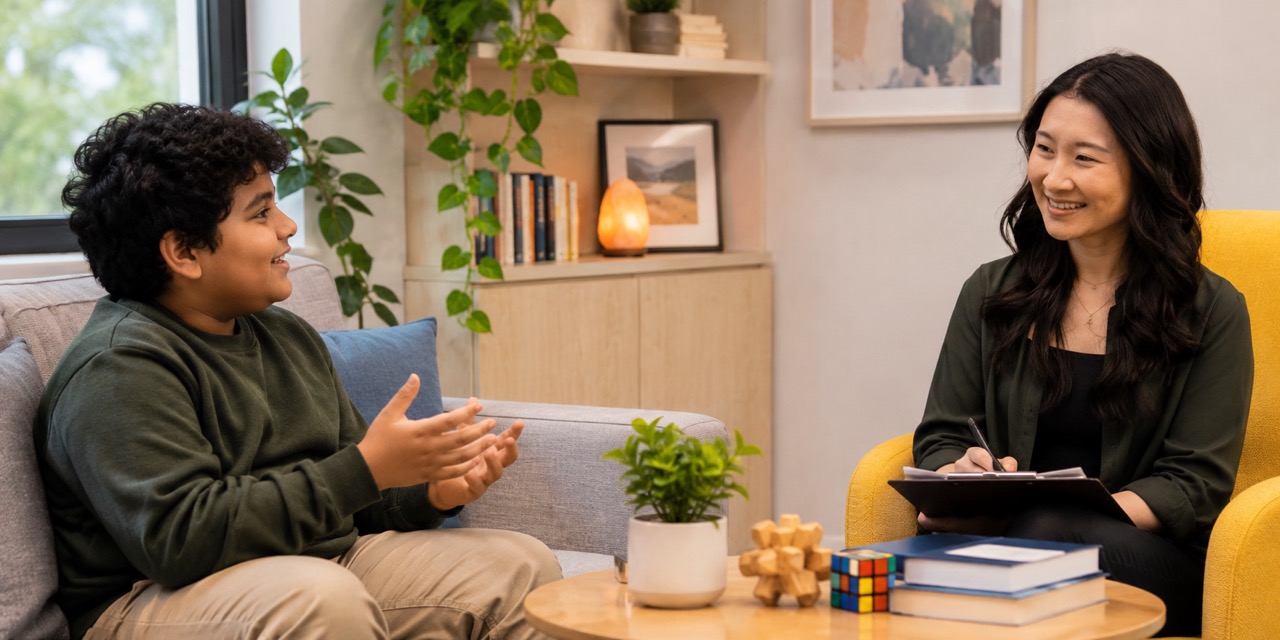
Your child spends time one-on-one with the psychologist doing puzzles, word problems, memory tasks and pattern activities. Most children enjoy it. We include breaks and schedule testing when your child is well rested, so they can do their best. Parents meet with the psychologist separately to share background.

Results and next steps

We explain the results in plain language at a feedback meeting. You'll receive a written report with your child's scores, strengths and challenges, plus recommendations for school, enrichment and home. The report can be submitted with gifted program applications and used to build an Individualized Program Plan (IPP).

Giftedness assessment FAQs

Have a question we haven't answered here? Book a free 15-minute consultation or call us at 587-321-3213.

What is an IQ test?

An IQ test is a standardized test of thinking skills, given one-on-one by a psychologist, that compares your child's results with other children the same age. The WISC-V, used for ages 6 to 16, gives a Full Scale IQ plus scores for verbal comprehension, visual-spatial reasoning, fluid reasoning, working memory and processing speed.

What IQ score counts as gifted?

There's no single cut-off for giftedness. Many school boards look for a score at or above the 98th percentile, which is a standard score of about 130. Some programs accept slightly lower scores or use the General Ability Index instead of the Full Scale IQ, so check the requirements of the program you're applying to.

Is an online or school group test the same as a giftedness assessment?

No. Online IQ quizzes aren't valid for diagnosis or program entry. Group screening tests used in schools, like the CCAT-7, can flag a child for a closer look, but an individual assessment by a registered psychologist gives a much more complete and reliable picture of how your child thinks and learns.

Who can do a giftedness assessment in Alberta?

In Alberta, intelligence testing is done by registered psychologists, or by provisional psychologists under supervision. At CloverCare Health in Sherwood Park, every giftedness assessment is completed by a psychologist registered with the College of Alberta Psychologists.

Do I need a referral for a giftedness assessment?

No referral is needed. You can book a giftedness assessment directly or start with a free 15-minute consultation to make sure it's the right fit for your child.

How do I get my child ready for a giftedness assessment?

Tell your child they'll be doing puzzles and brain games with a friendly helper, that there are no grades, and that it's fine not to know every answer. Make sure they've slept well and eaten breakfast, and bring their glasses or hearing aids if they use them.

What if my child is gifted and also has ADHD or a learning disability?

A child who is gifted and also has ADHD, a learning disability or another challenge is called twice-exceptional (2e), and it's more common than many people expect. We can combine a giftedness assessment with ADHD or learning assessments so the report reflects both your child's strengths and their challenges.

Can a child's IQ score change?

IQ scores are fairly stable from school age onward, but they can shift, especially in younger children, and anxiety, illness or attention difficulties on testing day can lower results. Some gifted programs ask for an assessment completed within a set number of years, so check the program's rules.

What happens if my child doesn't meet the gifted cut-off?

The assessment is still valuable. You'll know exactly where your child's strengths lie, why they may be bored or struggling at school, and how to support them, whether that's enrichment, subject acceleration or help with an area that's holding them back.

Will a giftedness assessment help at school?

Yes. Schools can use a giftedness assessment report to plan enrichment, ability grouping, subject acceleration or an Individualized Program Plan (IPP). It also helps teachers understand a child whose behaviour or motivation doesn't match their ability.

Let's Get Started
pencilsungraduation-hatheart-pulse linkedin facebook pinterest youtube rss twitter instagram facebook-blank rss-blank linkedin-blank pinterest youtube twitter instagram