A giftedness assessment is a structured evaluation of how your child thinks, reasons and learns. It's led by a registered psychologist using an individually administered intelligence test such as the WISC-V. You get a clear picture of your child's cognitive strengths, an IQ score that gifted programs recognise, and practical recommendations for school and home.



Giftedness means a child's reasoning and problem-solving abilities are well above what's typical for their age. School boards usually identify it with an IQ test given one-on-one by a psychologist, and many look for a score around the 98th percentile or higher. Gifted kids aren't simply high achievers. Many learn differently, feel things intensely and need a different kind of challenge to stay engaged.
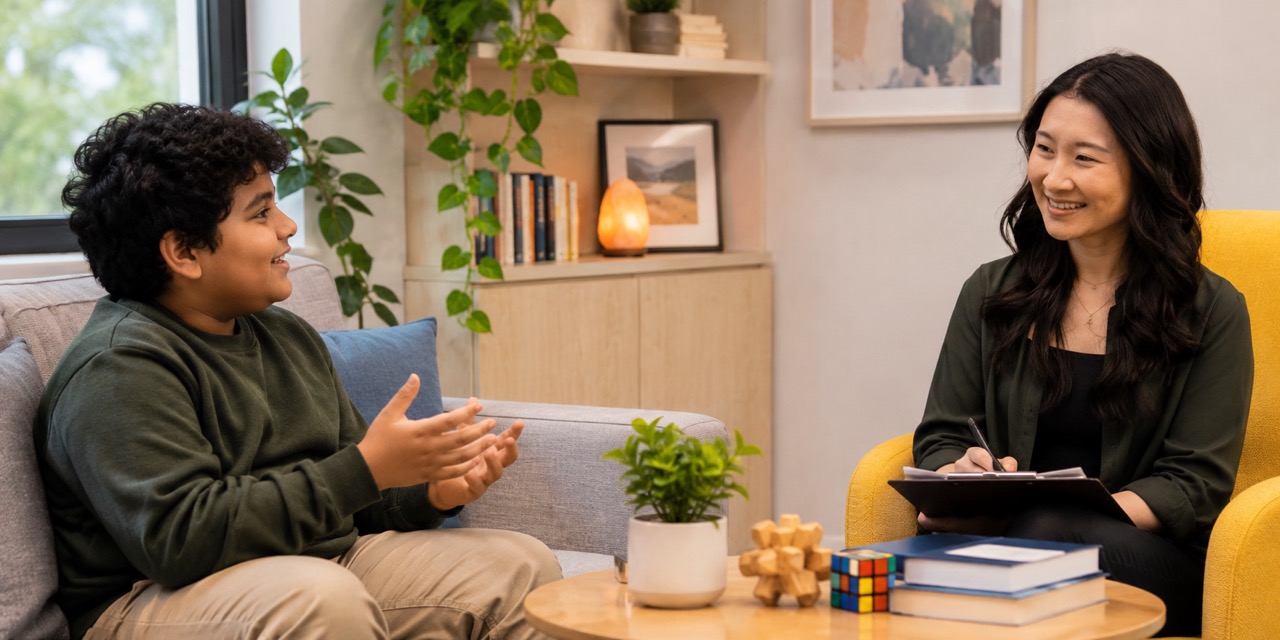


An IQ test is a standardized test of thinking skills, given one-on-one by a psychologist, that compares your child's results with other children the same age. The WISC-V, used for ages 6 to 16, gives a Full Scale IQ plus scores for verbal comprehension, visual-spatial reasoning, fluid reasoning, working memory and processing speed.
There's no single cut-off for giftedness. Many school boards look for a score at or above the 98th percentile, which is a standard score of about 130. Some programs accept slightly lower scores or use the General Ability Index instead of the Full Scale IQ, so check the requirements of the program you're applying to.
No. Online IQ quizzes aren't valid for diagnosis or program entry. Group screening tests used in schools, like the CCAT-7, can flag a child for a closer look, but an individual assessment by a registered psychologist gives a much more complete and reliable picture of how your child thinks and learns.
In Alberta, intelligence testing is done by registered psychologists, or by provisional psychologists under supervision. At CloverCare Health in Sherwood Park, every giftedness assessment is completed by a psychologist registered with the College of Alberta Psychologists.
No referral is needed. You can book a giftedness assessment directly or start with a free 15-minute consultation to make sure it's the right fit for your child.
Tell your child they'll be doing puzzles and brain games with a friendly helper, that there are no grades, and that it's fine not to know every answer. Make sure they've slept well and eaten breakfast, and bring their glasses or hearing aids if they use them.
A child who is gifted and also has ADHD, a learning disability or another challenge is called twice-exceptional (2e), and it's more common than many people expect. We can combine a giftedness assessment with ADHD or learning assessments so the report reflects both your child's strengths and their challenges.
IQ scores are fairly stable from school age onward, but they can shift, especially in younger children, and anxiety, illness or attention difficulties on testing day can lower results. Some gifted programs ask for an assessment completed within a set number of years, so check the program's rules.
The assessment is still valuable. You'll know exactly where your child's strengths lie, why they may be bored or struggling at school, and how to support them, whether that's enrichment, subject acceleration or help with an area that's holding them back.
Yes. Schools can use a giftedness assessment report to plan enrichment, ability grouping, subject acceleration or an Individualized Program Plan (IPP). It also helps teachers understand a child whose behaviour or motivation doesn't match their ability.

